

I’ve been writing quite a bit recently about two subjects: tools and planning. As I write this I’m facing two rather frantic days as I prepare for tomorrow night’s concert and reception. Yesterday I got all of my grocery shopping done, a task that I would normally have put off until today. So that means that today can be solely dedicated to food prep that can be done ahead, housework, and going over my music. We have our second concert-week rehearsal this evening, which will be fraught with the usual angst over our entrances and exits. (Why we can’t just have a standard procedure that we always follow is beyond me, but I guess it keeps us from getting complacent.)
The previous paragraph was written on Thursday, May 7, but I didn’t finish and post it. So now I can do so from the perspective of looking back at the events I was looking forward to at the time, if that makes sense. I reminded myself a number of times while all the hoopla was going on that I needed to pay attention to what was happening right then, whether it was loading the car or singing the concert or cleaning up the kitchen Saturday (a task that was mitigated by Jim’s wonderful help in serial dishwasher-loading.) And what happened? Well . . .
It didn’t go perfectly. Big surprise. I had worked, and worked, and worked some more on the music, and yet I didn’t feel totally confident either night in the performance. Saturday I never did just sit down and spend half an hour going over everything, with the result that my rendition of “Balia Di Sehu” that night was probably less articulated than Friday’s version. (We all struggled with memorization on this piece. The link is to a fabulous performance at a high-school choir festival.) You can fail to keep up the effort and and therefore fail to reap the full benefits of early preparation. I felt that the party wound down way too soon on Friday. I never got my third non-Chorale helper, so a few things fell through the cracks. (The picture is of setup in the fellowship hall before the hordes descended.) I took my snow scraper out of the car Friday to make room for the food, with the result that I had to clean off the heavy, wet snow on Saturday night with my umbrella. At least I had that along.
And you know what? It’s okay. There were plenty of things that went very, very well. People raved about the food Friday night. (The strawberry tarts were gobbled up without a trace.) We had a great crowd Saturday evening in spite of the snow. I didn’t sing perfectly but I was prepared more thoroughly than I had ever been for a concert. And, most importantly, the Chorale itself did great. My little contributions weren’t all that important in the grand scheme of things. Get over yourself. Debi! There are plenty of people who work hard at something and don’t succeed perfectly. (In that same vein of keeping one’s perspective on one’s own importance, I must, must, must include a link here to Gretchen Rubin’s blog post of today which I just read. Great stuff!)
And because I did make a conscious effort to savor the present, at least some of the time, I can look back on the event with pleasure and happiness. More and more I see the importance of embracing the moment, hokey as that phrase sounds. I hope to do an even better job of being prepared for the performance of Beethoven’s Ninth that is coming up Friday evening with the Arapahoe Philharmonic Orchestra. Follow the link to buy your tickets if you’re so inclined. And come early to hear the pre-concert lecture by the orchestra’s rock star of a conductor, Devin Hughes, as well as our conductor, Brian Patrick Leatherman, and the composer of the concert’s opening piece, Edgar Girtain.
The previous paragraph was written on Thursday, May 7, but I didn’t finish and post it. So now I can do so from the perspective of looking back at the events I was looking forward to at the time, if that makes sense. I reminded myself a number of times while all the hoopla was going on that I needed to pay attention to what was happening right then, whether it was loading the car or singing the concert or cleaning up the kitchen Saturday (a task that was mitigated by Jim’s wonderful help in serial dishwasher-loading.) And what happened? Well . . .
It didn’t go perfectly. Big surprise. I had worked, and worked, and worked some more on the music, and yet I didn’t feel totally confident either night in the performance. Saturday I never did just sit down and spend half an hour going over everything, with the result that my rendition of “Balia Di Sehu” that night was probably less articulated than Friday’s version. (We all struggled with memorization on this piece. The link is to a fabulous performance at a high-school choir festival.) You can fail to keep up the effort and and therefore fail to reap the full benefits of early preparation. I felt that the party wound down way too soon on Friday. I never got my third non-Chorale helper, so a few things fell through the cracks. (The picture is of setup in the fellowship hall before the hordes descended.) I took my snow scraper out of the car Friday to make room for the food, with the result that I had to clean off the heavy, wet snow on Saturday night with my umbrella. At least I had that along.
And you know what? It’s okay. There were plenty of things that went very, very well. People raved about the food Friday night. (The strawberry tarts were gobbled up without a trace.) We had a great crowd Saturday evening in spite of the snow. I didn’t sing perfectly but I was prepared more thoroughly than I had ever been for a concert. And, most importantly, the Chorale itself did great. My little contributions weren’t all that important in the grand scheme of things. Get over yourself. Debi! There are plenty of people who work hard at something and don’t succeed perfectly. (In that same vein of keeping one’s perspective on one’s own importance, I must, must, must include a link here to Gretchen Rubin’s blog post of today which I just read. Great stuff!)
And because I did make a conscious effort to savor the present, at least some of the time, I can look back on the event with pleasure and happiness. More and more I see the importance of embracing the moment, hokey as that phrase sounds. I hope to do an even better job of being prepared for the performance of Beethoven’s Ninth that is coming up Friday evening with the Arapahoe Philharmonic Orchestra. Follow the link to buy your tickets if you’re so inclined. And come early to hear the pre-concert lecture by the orchestra’s rock star of a conductor, Devin Hughes, as well as our conductor, Brian Patrick Leatherman, and the composer of the concert’s opening piece, Edgar Girtain.


 In other words, in order to exert the effort to accomplish a goal, do you always have to give something up? The short answer is yes. If I do A, I can’t at one and the same time do B. I have to give B up. I can’t at one and the same time waste my time reading about the JonBenet Ramsey murder case and also do something productive. (I don’t know exactly why I’ve recently allowed myself to get drawn into that horrible quagmire all over again, but once I say to myself, “I’ll just google this really quick and see if there’s anything new” I might as well shoot myself in the foot and be done with it.)

 The first sentence of the introduction to my
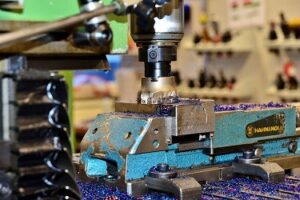 I seem to be on a tool tear, as it were. Over the past several weeks I’ve written about using Scrivener as a writing tool, my little laptop as a bill-paying tool, and habits as tools to help lend structure to my life. But . . . I’ve also emphasized that tools don’t do the work for us. So I’m dedicating this post to two non-tool-users, Woody Allen and K. Lee Scott
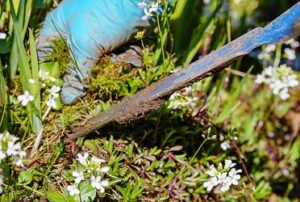 Here’s what I want: to move along doing the grungy stuff on automatic pilot while I think great thoughts. Wouldn’t that be wonderful? Suddenly, at the end of the day, I’d realize that every task had been done perfectly but that I hadn’t had to exert any effort to do them. All done through the magical power of habits and routines. We all know, though, that it ain’t never gonna happen. And guess what? it would be a shame if it did
 Can reading, and re-reading, and re-re-reading a book make you happy? The answer is certainly yes for me. The book in today’s post didn’t just entertain me; it added a new facet to my understanding of the past, not only for the particular events described but for history in general. I don’t remember when I first read this, but it was probably when I was in high school. I came back to it as an adult and used its story about the ill-fated Richard III as the starting point for the 9th-grade world history class I taught for a number of years. I was reminded of the book recently because of all the hoo-hah around the discovery of Richard’s bones in Leicester, England, and their recent re-interment. Tey’s masterpiece has been dubbed the greatest detective novel of all time (Crime Writers’ Association, 1990), and I would agree with that assessment. You may recall an earlier post in which I said that Dorothy Sayers’ Gaudy Night was the greatest novel of the 20th century; that is only nominally a detective or mystery novel. So I’m not contradicting myself. Here’s my take: