 I wrote last week about my desire to keep a Christian Sabbath, with the spirit and not the letter of the law. Specifically I wanted to keep the Old Testament injunction “six days shalt thou labor” instead of my usual “six days shalt thou procrastinate,” and avoid the deadly “I’ll get up at the crack of dawn on Sunday and get it all done” mentality, which has been the cause of my being late to church many times, stressed, tired, under the gun, and totally without the ability to enjoy a day of rest and spiritual refreshment. (Just to be clear–this is only about myself and my personal activities. I’m not going to get all worried about whether or not it’s okay to go out to eat, or to stop at the grocery store because I genuinely forgot to buy something, or even to go to a movie. All of those activities do cause other people to work, but they’d be doing it anyway . . . so I think I’ll just concentrate on my side of the street, or the paper, or whatever figure of speech you want to use.)
Goal-Setting Tweaks
 I said yesterday that I’d be writing on some additional ideas I’ve gained from Smarter Faster Better, the new book by Charles Duhigg. Duhigg’s strength as a writer is in the stories he tells about real people and situations that illustrate his ideas. His investment of time spent gathering this information, specifically in interviews, must be enormous.
In chapter 4 of SFB Duhigg tells two fascinating stories: First, how Israel was almost destroyed in the Yom Kippur War of
My Personal Sabbath-Keeping
 Jesus said, “The Sabbath was made for man, not man for the Sabbath” (Mark 2:27). In other words, the concept of a day of rest wasn’t just an arbitrary rule imposed onto the Israelites but something for their good, something that served them, not something for them to serve. But, as I discuss in the “Time and Work” chapter of my Intentional Happiness book (see the sidebar), the concept of a day of rest is tricky, because you have to plan ahead to make it happen. I so often find myself under the gun on Sundays, the day set aside by Christians for worship, a new practice instituted because the resurrection of Jesus was on “the first day of the week.”
Self-awareness isn’t the same as self-absorption
 Picture two runners in a race. The first one is thinking, “I’m so tired. I’m not going to make it. My heel’s getting a blister. I should have gone to bed earlier last night. I should have drunk more water before the race. Everyone’s passing me. I’m not going to make it.” The second one is thinking, “Okay, not such a good idea to stay up late last night. I need to just pace myself, get to each fencepost. Feeling a little dehydrated. Well, nothing to be done about that now. Focus on the race. Catch up to that guy ahead of me. Plan better next time.
Loving the Mozart Requiem isn’t the same as singing it!
 My favorite movie of all time is Amadeus, the 1984 film adaptation of the play by Peter Shaffer. (Not the R-rated “Director’s Cut” version, please, but the PG-rated original release.) It’s not historically accurate in many ways, but so what? It is permeated with the glorious, glorious music of Mozart. And I have to believe that Tom Hulce’s portrayal of the this incredibly gifted but often troubled genius is very close to what the real man was like. So many great scenes.
An Initially-Disappointing but Ultimately-Helpful Book
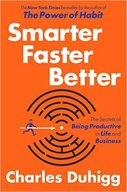 Smarter Faster Better: The Secret of Being Productive in Life and Business by Charles Duhigg, Random House, 2016. Available in several formats.
I found Duhigg’s ideas in his first book, The Power of Habit, so helpful and so interesting that I quoted from that source in my own book. Now his second book is out, and at first I was very disappointed with it. The thing of it is, he does something in his introduction that no writer or speaker should ever do: he raises an expectation that he never fulfills. (There’s a parallel principle in drama: “If a gun is on the mantle in the first act, it must go off in the third.”)
Do you put up roadblocks for yourself?
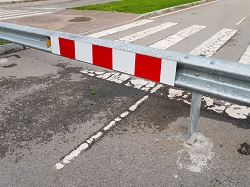 As I work toward becoming more productive (tomorrow will be a review of Charles Duhigg‘s new book), I find myself doing something rather puzzling: I’m all set to get on with a task or goal, heading straight for it, and then I think, ‘Oh, before I get started I’ll just . . . ‘ and before you know it the momentum has stalled. 45 minutes have passed since I was supposedly going to get started.
What’s going on here? I can’t be the only one who does this. Here are some possible answers:
The Fragility of Good Habits
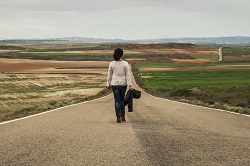
I wrote a post recently about Michael Caulfield’s book on health and fitness and mentioned that his ideas on physical fitness, particularly on the need to push yourself, had changed my own exercise routine. Instead of going on my 3 1/2-mile walk, which I really enjoy, I switched over to do more intense sessions on our exercise bike. After a week or so of this routine I realized that my knees were killing me. I was going up the stairs like an old lady. (Nothing against old ladies–I’m going to be one myself someday!)
Loving a Difficult Life
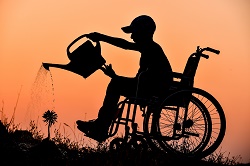 I mentioned this idea last month in Don’t Miss Out! It’s hard enough sometimes to concentrate on the wonderful, long-anticipated events in our lives, much less the difficulties. But I heard something just great this morning out of the corner of my ear, as it were, on NPR, in a story about the myth of the so-called “midlife crisis.” There were several interviews with middle-aged people whose lives hadn’t turned out as planned but who were nevertheless happy and productive. Then the reporter said that she had to include a quotation from a woman named Victoria Gallucci (hope I’m spelling that right, Victoria!) who . . .
More Procrastination Wisdom
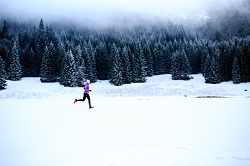 “I have discovered that there is one main reason why we procrastinate: it rewards us with temporary relief from stress.” Neil Fiore, author of The Now Habit and other books. I quote from him fairly extensively in my own book. (See sidebar for ordering information.) Last week I posted about the mistaken idea that you have to get motivated before you get to work; that you have to feel a certain way first. So did the runner in the picture ask herself if she really felt like running through the snow? If she had, she probably would have stayed by the fire drinking hot chocolate. She would have avoided the stress of the cold . . .