
The Gluten Lie and 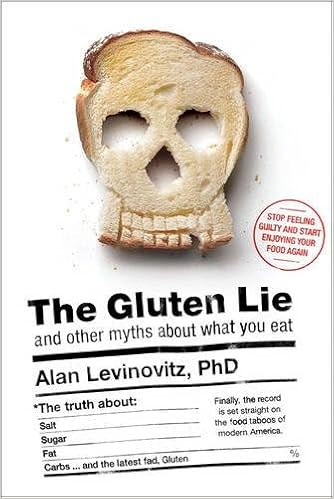 Other Myths about What You Eat by Alan Levinovitz, Ph.D., originally published in 2015 by Regan Arts, now available in a variety of formats. (Book image and title are both affiliate links; if you click through to the Amazon page and buy the book there I will earn a small commission at no additional cost to you.)
I first became aware of this book because its author was featured on the Freakonomics Radio podcast, to which you should subscribe and faithfully listen. (And then you should read the Freakonomics book, Freakonomics [Revised and Expanded]: A Rogue Economist Explores the Hidden Side of Everything
Anyway, the author of this book, Alan Levinovitz, was interviewed not too long ago on the show, and since I’m a total fan of any author who wants to punch a hole in our society’s various food fads and manias, I made sure to get hold of his book.
 Sometimes I think that this blog wouldn’t have many entries if I didn’t do so much cribbing from other sources. Gretchen Rubin is a big crib, but another one is
  For the past three years I’ve been involved with an organization that promotes Bible study and faith around the world,
 I know, I know: this small-things-every-day idea comes up over and over again in this blog because I struggle with it so much. I devoted a whole chapter in my book to the idea of “the power of small things.” (Read that chapter
  Two ways my procrastination is costing me right now:
 It’s the old “drunk on the horse” scenario once again. We humans can’t seem to stay in the middle of the road, no matter how hard we try. The fad of the moment takes over and people start going to extremes. The bandwagon starts filling up. Nowhere is this tendency more evident than in the area of food. Because we’re so rich and so well-fed, indeed overly well-fed, we have the luxury of developing food fads. Believe me, people who are living on the verge of starvation don’t have any time for worrying about their cholesterol. They just need something to eat.
 If you’ve taken my advice and subscribed to the
 . . . borne back ceaselessly into the past.”
